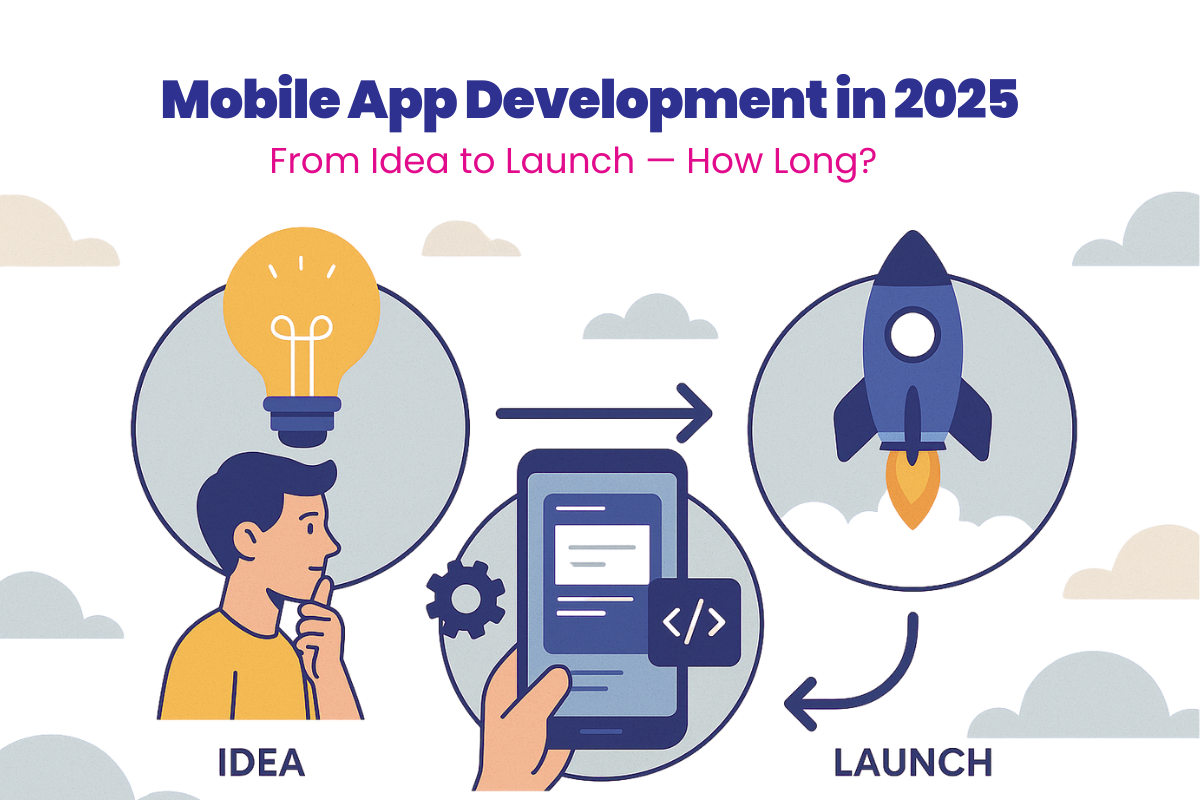
In 2026, mobile apps are no longer just “nice-to-have” digital products; they’re business essentials. Whether you’re a startup founder or an established company, turning an app idea into a market-ready product can be the game-changer that sets you apart. But one question still dominates the minds of entrepreneurs:
how long does it take to go from idea to launch?
The answer isn’t a one-size-fits-all number. Timelines vary based on complexity, features, team expertise, and budget. Still, by understanding the stages of mobile app development, you can plan better and avoid frustrating delays.
Stage 1: Ideation & Research (2–4 weeks)
Every great app starts with a strong concept-but the concept alone isn’t enough. At this stage, you’ll validate your idea by researching the market, studying competitors, and identifying your target audience. In 2025, AI-powered analytics tools can speed up market research, but the human touch is still critical for understanding user pain points.
This is also the time to define the core features of your app and set realistic goals. Skipping thorough research often leads to costly pivots later in development.
Stage 2: Planning & Wireframing (3–6 weeks)
Once you have clarity, the next step is creating wireframes-the blueprint of your app. Here, designers sketch user flows, plan navigation, and ensure the experience is intuitive. This phase is about making sure the app looks good and works seamlessly.
If you’re working with a company that offers Mobile App Development Services in India , you’ll likely benefit from a collaborative approach. Many Indian app development teams provide detailed prototypes early on, so you can visualize the final product before coding begins.
Stage 3: Development (3–6 months)
This is where the real magic happens. Developers start coding the backend (servers, databases, and APIs) and the frontend (what users see and interact with). The time frame here depends heavily on:
- App Complexity: A simple app may take 3 months, while a feature-rich platform can take 6 months or more.
- Platform Choice: Building for iOS and Android separately takes longer than using cross-platform frameworks like Flutter or React Native.
- Integration Needs: If your app requires payment gateways, location tracking, or advanced security, expect extra time.
Many businesses in 2025 prefer outsourcing development to specialized agencies. Partnering with experts in mobile app development ensures the process is efficient without compromising on quality.
Stage 4: Testing & Quality Assurance (4–8 weeks)
Before you hit “launch,” your app needs rigorous testing. Bugs, crashes, or even small usability issues can drive away users in seconds. QA teams test across multiple devices, operating systems, and network conditions to ensure your app performs flawlessly.
Testing is not just a technical necessity-it’s a brand reputation safeguard.
Stage 5: Launch & Post-Launch (2–4 weeks)
The launch phase includes app store submissions, marketing campaigns, and gathering early user feedback. But your journey doesn’t end here. Post-launch updates, feature enhancements, and performance optimizations are key to keeping your app relevant.
So, how long in total?
On average, a complete mobile app development journey in 2025 takes 5 to 9 months from idea to launch. The timeline can be shorter for simple projects and longer for complex, enterprise-level apps.
By working with experienced professionals-especially those offering mobile app development services in India-you can streamline the process, control costs, and ensure your app is market-ready without unnecessary delays.
Final Thought
In the fast-paced tech world of 2025, speed is important, but quality wins every time. A rushed app might get you to the market faster, but a well-crafted, user-focused app will keep you there.